In animation, "character lock" means the designs are final. No more tweaking proportions, debating hair colors, or rethinking silhouettes. The characters are who they are. Today we hit that milestone for all seven main characters in Fairy Dinosaur Date Night.
Gabe. Nina. Mia. Leo. Jenny. Ruben. Jetplane. Every one of them now has an approved turnaround sheet showing them from the front, three-quarter, side, and back. This is the reference that every future storyboard panel, 3D model, and rendered frame will be measured against.
Why Character Lock Matters
If you've ever watched a TV show where a character looks subtly different from episode to episode, you've seen what happens without character lock. In traditional animation, model sheets get pinned to every animator's desk. It's the contract between the design and the production.
For us, it matters even more. We're using AI to generate storyboard panels, and AI has a consistency problem. Give it the same character description twice and you'll get two different-looking people. The approved turnarounds are our anchor. Every new panel gets generated using image-to-image with these references, so the characters stay on-model.
We already tested this. After locking the designs, we ran a consistency audit on Scene 1 and found five panels where characters had drifted off-model. We regenerated all five using the approved turnarounds as image references, and the improvement was immediate. Characters actually look like themselves now.
Meet the Cast
Gabe & Nina (The Parents)
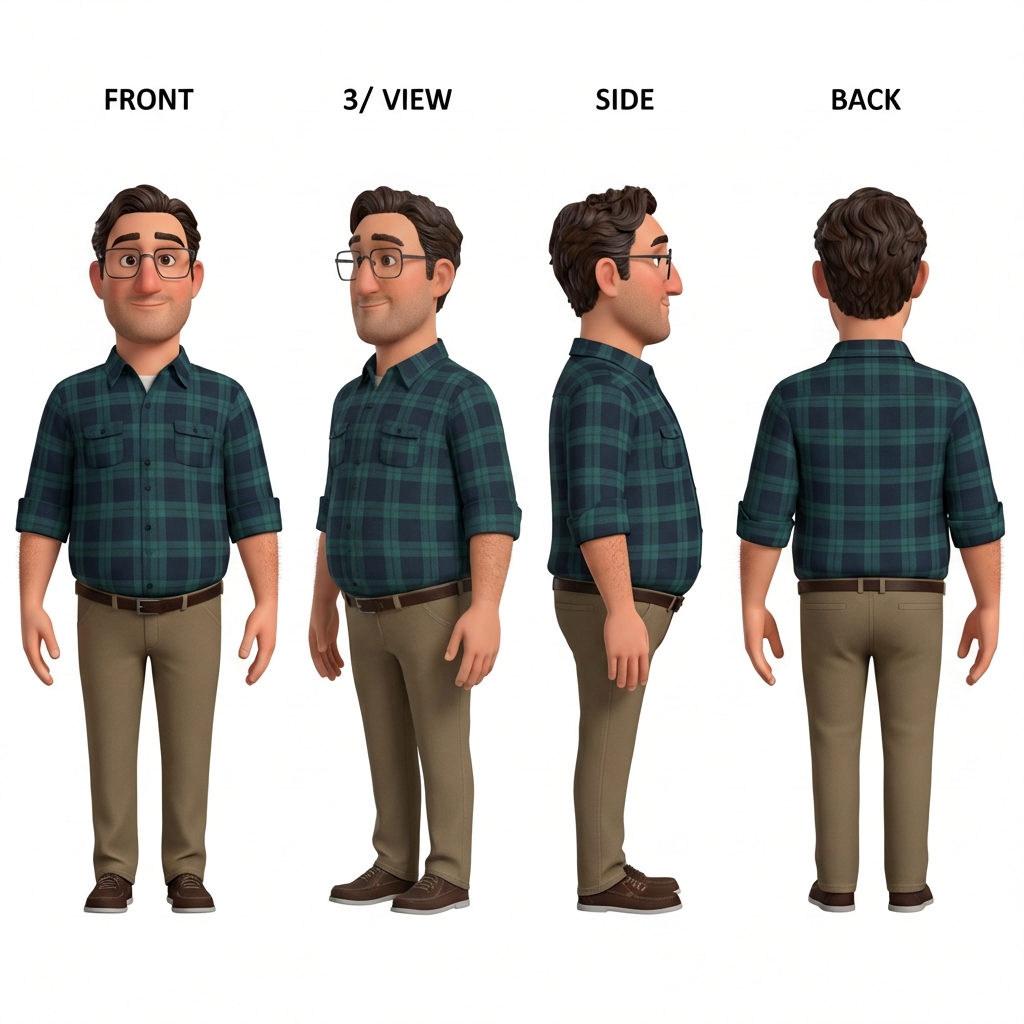
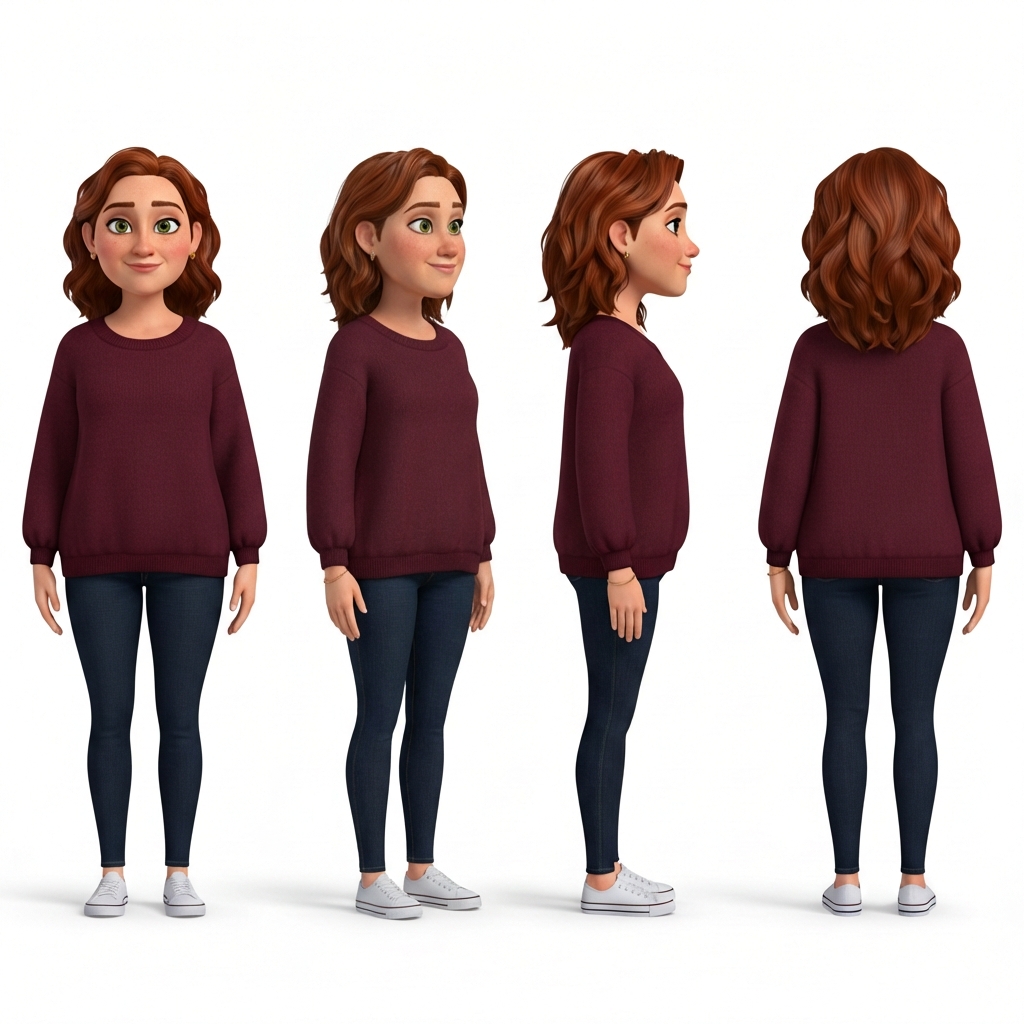
Gabe is the tired workaholic dad, soft around the middle, glasses, the kind of guy who forgot how to have fun somewhere between his second kid and his third promotion. Nina is elegant and put-together, the one who booked the restaurant and picked out the dress. They're going on a date night. It will not go as planned.
Mia & Leo (The Kids)
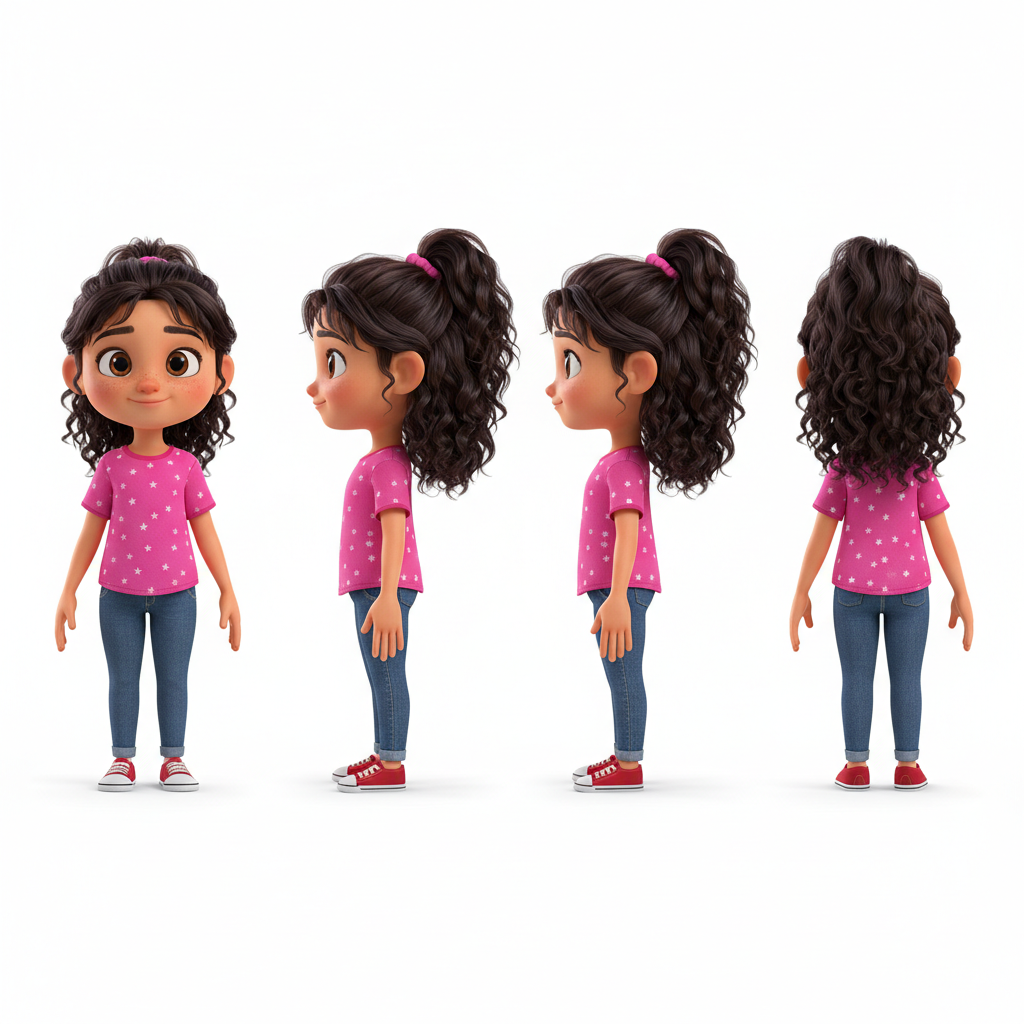
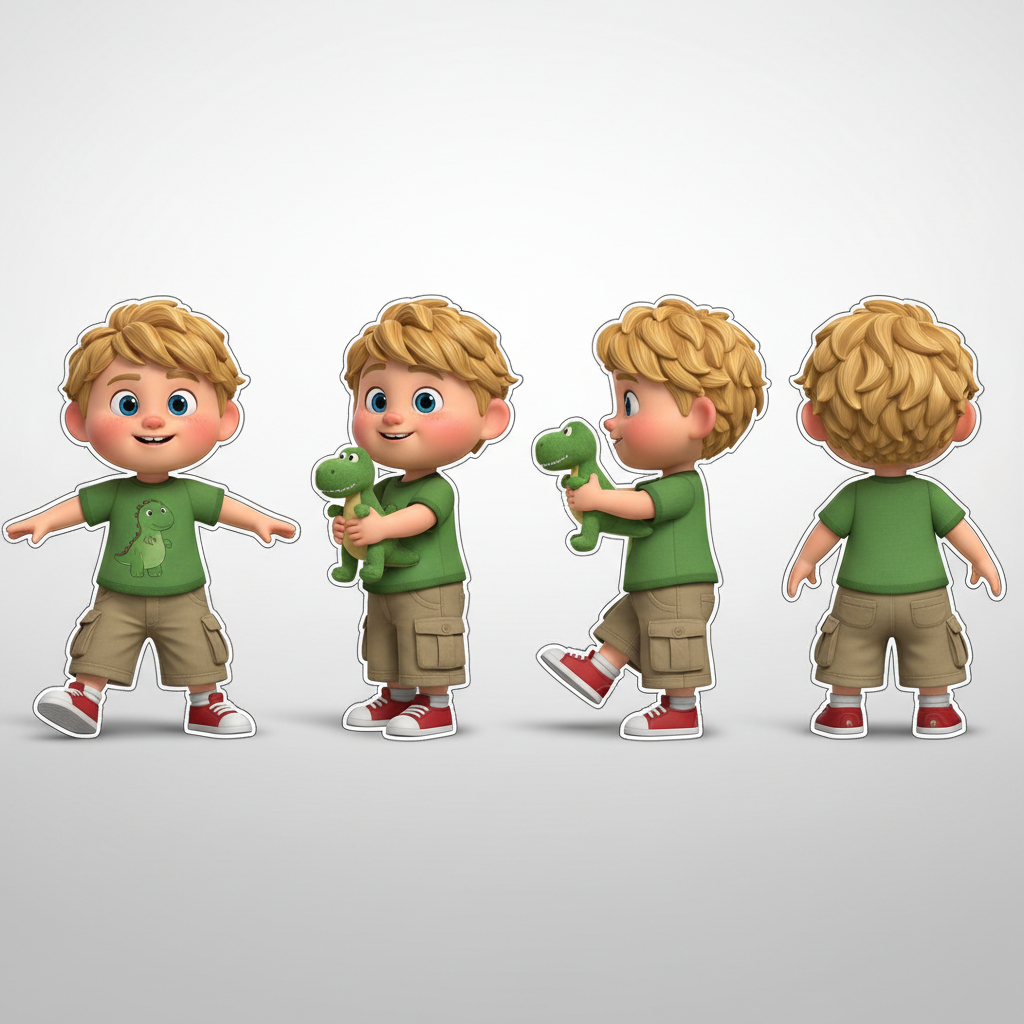
Mia is eight and already the most responsible person in the family. Leo is five, lives in dinosaur pajamas, and carries a plush T-Rex everywhere. These two carry the adventure once the parents are out of the picture.
Jenny (The Babysitter)
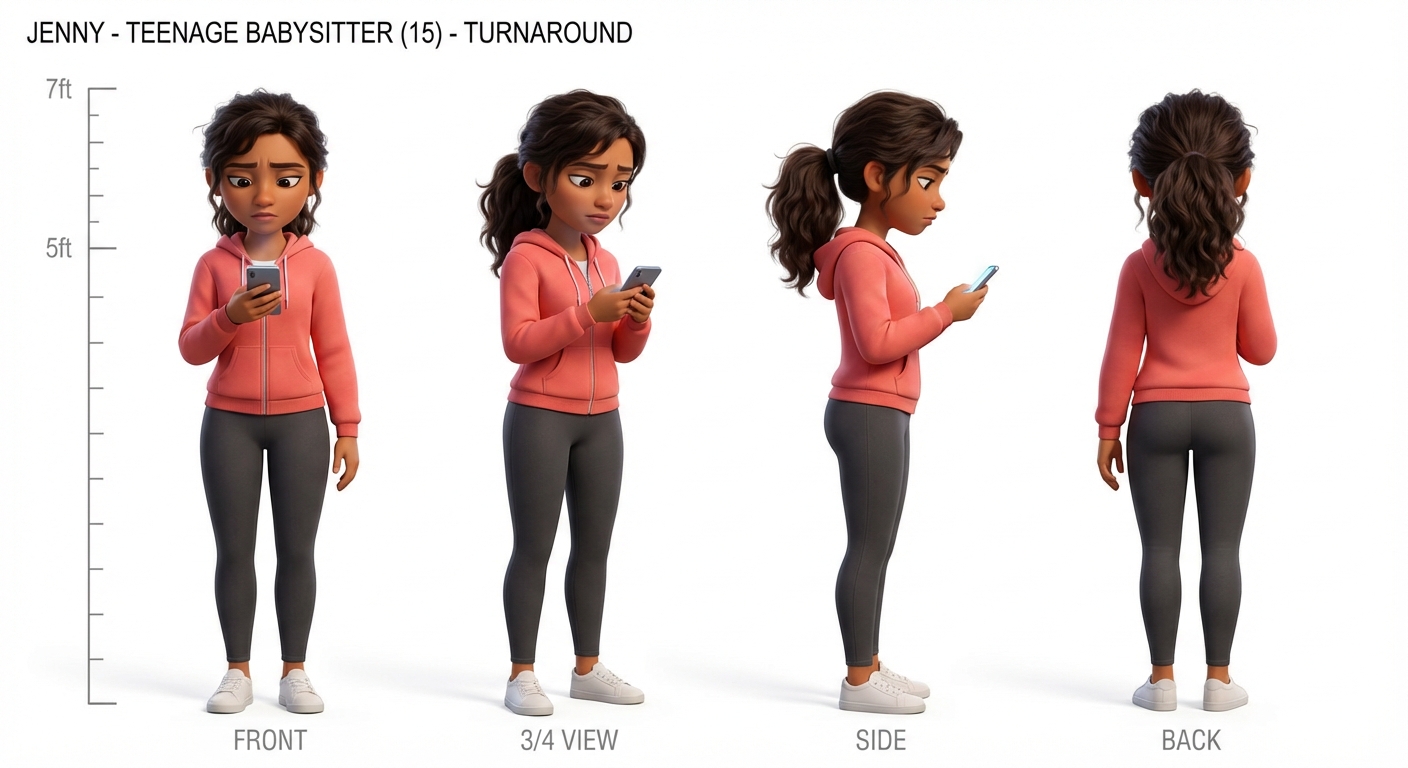
Jenny went through a meaningful redesign during this process. Early concepts had her as a generic blonde teenager. The final approved version is Latina with warm skin tone and dark wavy hair. She's fifteen, glued to her phone, and completely unprepared for what's about to happen in this house.
Ruben (The Fairy Godfather)
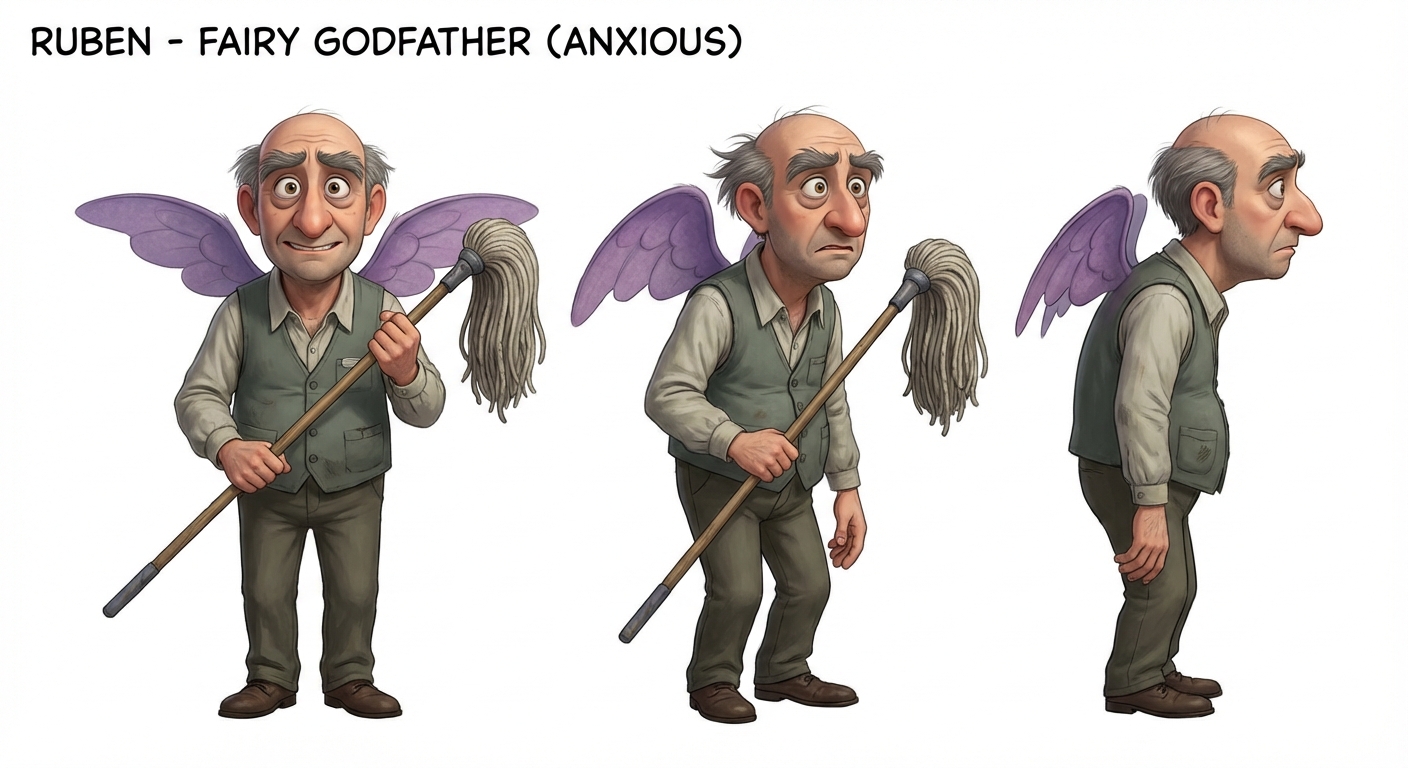
Ruben was the hardest character to get right. By far.
The problem was that "fairy godfather" conjures a very specific mental image, and it's wrong for this character. Ruben isn't magical and powerful. He's a washed-up, anxious, 49-year-old fairy who looks older than his age. He wears a rumpled janitor uniform. His wings are droopy and wilted. He peaked during the Renaissance and has been coasting ever since.
Getting the AI to generate that required going back to the screenplay. Not the character description—the actual scenes where Ruben appears. The way he talks, the way other characters react to him, the specific brand of defeated optimism that makes him funny and sad at the same time. We fed all of that context into the generation process, and it took multiple rounds of iteration before Ruben on screen matched Ruben on the page.
The lesson: for complex characters, a physical description isn't enough. You need to understand who they are emotionally before the visual design clicks.
Jetplane (The Dinosaur)
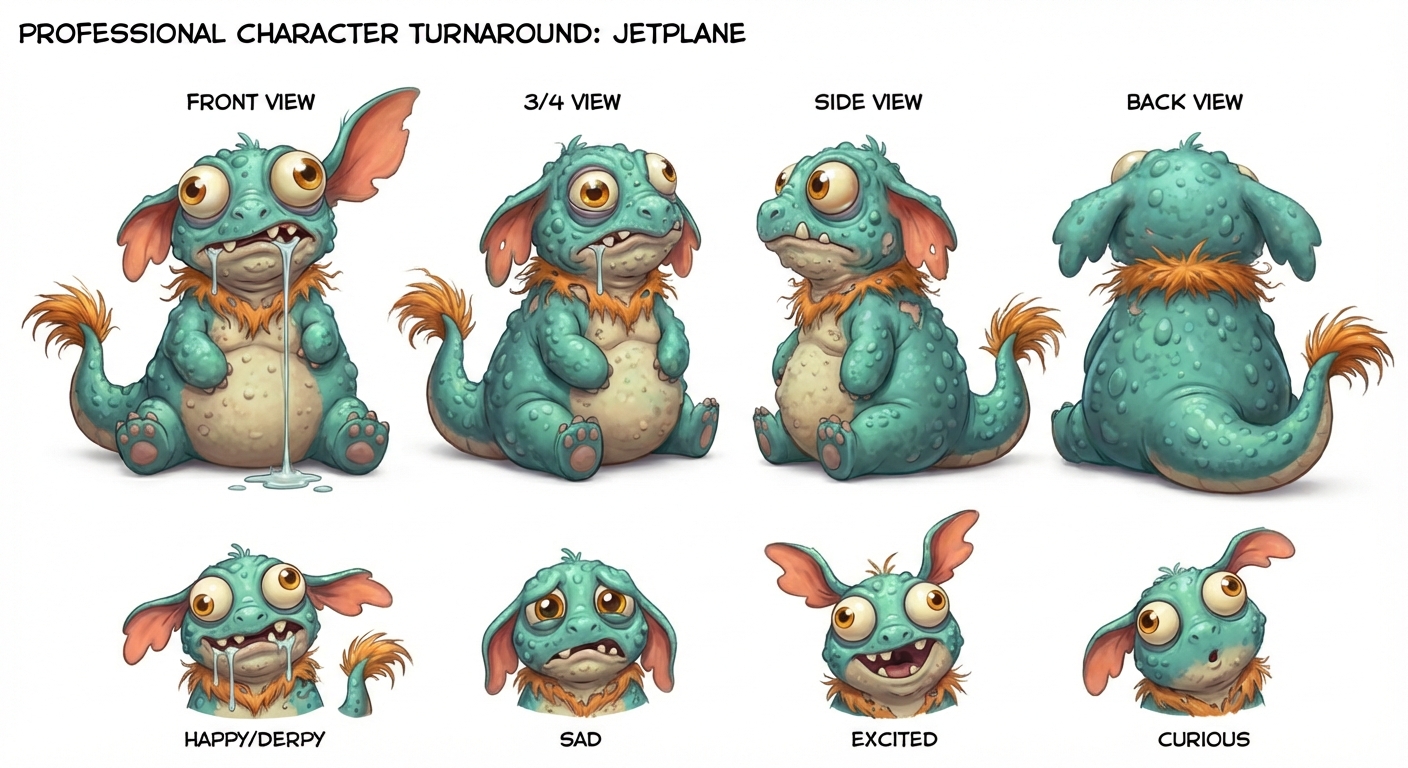
Jetplane is a color-farting dinosaur. That sentence is in the screenplay. He's also the heart of the movie in a lot of ways—the bond between Leo and Jetplane drives the emotional stakes of Act 3. So the design needed to be both ridiculous and lovable. Big expressive eyes, chunky proportions, the kind of creature a five-year-old would immediately want to hug.
The Process: AI Generation, Human Direction
Every character was generated using Gemini's image generation, but the creative direction was entirely human. The AI didn't decide what Ruben should look like. It generated options based on detailed descriptions, and a human reviewed, rejected, adjusted, and re-prompted until each design felt right.
This is the part that gets lost in conversations about AI art. The tool generates pixels. The human makes decisions. Deciding that Jenny should be Latina, that Ruben needs to look more tired, that Jetplane's proportions should be chunkier—those are creative choices that no amount of prompting automation can replace.
The turnaround sheets themselves went through multiple rounds. Generate, review, note what's off, adjust the prompt, regenerate. For Ruben, this cycle happened more times than I want to admit. For Gabe and Nina, it was faster because their designs are closer to archetypes the model already understands well.
What's Next
Character lock means we can now do a systematic consistency pass across all storyboards. Every panel in every scene gets checked against the approved turnarounds. Panels where characters are off-model get regenerated using image-to-image with the locked designs as reference.
Scene 1 is already done. The rest of the movie is next.
After that, these turnarounds become the input for 3D model generation. But that's a future blog post. Today, we celebrate having a cast that actually looks consistent.